Trail Trials

Cycling is one of the most efficient modes of transport there is. On a flat, smooth surface, the effort required to cycle is almost negligible. Mountain biking, by contrast, is a sport involving the use of bicycles on terrain unsuitable for bicycles. It can qualify as an ‘extreme sport’, at least insofar as it entails risks of injury and even death, when going down a mountain rather than up. Naturally, it requires a few thousand pounds of specialist equipment, not to mention lycra clothing. God forbid that one should take an ordinary bicycle to a mountain – one lacking suspension, disc brakes, titanium this, specially reinforced that, and Shimano the other – or wear street clothes.

There are, I imagine, many schools of thought as to what mountain biking is all about. To me, unqualified though I may be to comment, if one takes a bicycle to a place unfit for bicycles in order to test one’s bicycling skills, then there should be in the mind of cyclist a degree of acceptance of the unsuitability of the terrain. In other words, rather than wishing the terrain were other than it is, the ‘true’ mountain biker negotiates it successfully through their exceptional dexterity and mastery of the bicycle. If you’re going to wish the terrain were different, then surely you would be better off cycling elsewhere than in the, for want of a better word, wilderness.

An alternative perspective on what mountain biking is all about is evidenced by the introduction of special mountain biking trails in areas fortunate enough to feature appropriate topography. Here, what there is of ‘nature’ is simply a backdrop to a manufactured cycleway that has been engineered to provide the cyclist with the means to self-administer a dose of adrenalin. Berms, jumps, table-tops, and drop-offs are all constructed and maintained, and at quite some expense, with the usual justifications of providing an ‘experience’ and a ‘destination’ that will boost the local economy, put the location on the map, and so forth. Multiple such trails then compete with each other for the attention of the local, regional, national and even global community of adrenalin-junkies to parade their respective equipment, lycra, sunglasses, death-wishes and mid-life crises. Were it not for the skills and mastery of the bicycle that are also required to navigate them without injury, such trails might as well be roller-coasters. Both are fun, though.

This is what ‘nature’ can become. Not a place to be, not a place to adapt to, but a place to be adapted so that people can have a thrilling ‘experience’ from educating themselves to risking their lives, usually signed by some idiotic flapping sail-shaped signs and accompanied by a cafeteria, gift shop and/or visitor centre. Somewhere to ‘go to’ with your bikes strapped to the roof of your SUV, wearing special clothes you wouldn’t wear every day. Or which you do wear every day as a sign to others that you’re the kind of person who might head off on an adventure at any minute, or have just come back from one.

The two different attitudes to mountain biking, then, reflect a fundamental dichotomy in how we relate to nature as humans. In one, we learn to accept what is there and work with it. In the other, what is there is not good enough, and we change it so that it fulfils its ‘purpose’ to us better. The former is how we live in nature and see ourselves as part of it; the latter is a trail to the ecocyborg we have already ridden a long way along.

Augmented Reality

Apple’s new Vision Pro goggles have taken augmented reality (AR) to the next level. Rather than trying to put digital content onto the real world, they convert the real world into digital content and augment that. (This, at least, is my reading of the ‘virtually lag-free’ statement on Apple’s web page.) Charlie Brooker’s Black Mirror series occasionally riffs on the potentially dystopian aspects of AR, such as in the episode ‘Men Against Fire‘ and ‘White Christmas‘. But AR has some interesting implications from an ecocyborg perspective.

These googles are effectively augmenting their humans — they, like many everyday IT tools we take for granted — turn us into cyborgs while using them. Critically, however, they are a ‘shortcut’ to ecocyborgs. They can change our perceptions of the environment around us digitally, rather than through engineering. Do ecocyborgs necessarily have to be meat (and/or veg) ware? Must they be entirely physical phenomena, rather than at least partly virtual? By altering how we see the world around us, these kinds of tool might be able to help us live comfortably in spaces we would ‘naturally’ find uncomfortable. It is not so difficult to imagine a company running your habitation telling you to leave your goggles on for ‘the best user experience’…

Much more interesting, however, is that the virtual augmentation of physical space manifests multiple realities. If everyone is wearing goggles, there is no longer a single, common, shared world-out-there to discuss. Instead there are multiple, independently constructed realities — parallel digital overlays on the (single) physical world — that cannot necessarily be unified. Ecocyborgs are the death of nature; augmented reality the death of science. Sort of. You’ll still die if you walk off a physical cliff your goggles have told you is a more pleasing plain. But maybe your grieving friends can use simulations of you to continue to interact with their conceptualizations of you after you are dead. (Another theme explored by Black Mirror.) Perhaps this can be done so seamlessly that they don’t even know you are dead — for them, you are still alive, so long as they keep the goggles on.

The potential of AR is immense — imagine visiting a ruin and being able to see it restored. The meeting use case explored on the Vision Pro website could render travelling for conferences a thing of the past. However, the ability to wilfully alter one’s reality is a power that can easily be misused. Your goggles could, for example, ensure all the people you see are beautiful people — which is the thin end of a potentially very sinister and/or creepy wedge.

A central principle behind the ecocyborg is the coevolution of (post-)humans, (post-)environments and technology. We change our environment, supposedly imposing our will on it — making it more ‘us’ — but forget that changing our environment changes our ‘selves’, which logically and ironically makes us less ‘us’. The self that made the decision to change its environment is not the self that ends up living those changes. Each of these changes is mediated through technology, which also coevolves with humans and their environments in accordance with demand, materials, trade and pollution.

AR allows us to change at least the appearance of our environment with no more physical effort than the click of a button or the swipe of a hand. How will that change us? Will it make us more tolerant of deficiencies in unaugmented reality? Why go to the effort of mowing the lawn when AR can just show you your garden with a mown lawn rather than the ‘unsightly’ long grass? Or will it make us less satisfied with the way things are because AR is always showing us something better? Will we become so attached to AR devices that we wear them habitually, or even start to experience mental or physiological symptoms when the devices are switched off or run out of power? Are there religious uses for AR? Maybe fundamentalists could use AR to show demons and angels fighting over strangers’ souls, or perhaps even censor material around them that is contrary to dogma. Flat earthers can see the world as though it really is flat. Could AR mean the end of the beauty industry? Perhaps we will generate avatars of ourselves for others in AR to see us how we would like to be seen… Will it then be rude — even discriminatory — not to use AR to see people how they want others to see them? And what about the clashes of different people’s augmentations of reality? Will we fight over them? Will we hack others’ ARs to force them to see things our way — or even to see a flat plain when there is a cliff? At a larger scale, will companies pay AR manufacturers to cover up evidence of environmental misdeeds — nobody sees the polluted river unless they take their headset off — by then a sort of ‘red pill‘ experience?

More importantly, does AR mean the ecocyborg is no longer necessary? I think not. The Vision Pro is to sight what the Sony Walkman was to hearing. But humans have many other senses and needs, which ecocyborgs will be required to satisfy: hunger, thirst, thermal comfort and immune system training at a basic level, but also gadgets and the energy to power them, sanitation, circular consumption and distribution of materials, and space to allow free expression.

Habitats for Humans

Animal welfare campaign organizations articulate their case around ‘five freedoms‘ that animals under human control should have: freedom from hunger or thirst, freedom from discomfort, freedom from pain and disease, freedom to express normal behaviour, and freedom from fear and distress. Perhaps because we don’t like to see ourselves as being free rather than ‘under control’, nor indeed do we like to see ourselves as animals, it’s not clear to me that we seek to grant ourselves the same freedoms in the habitats we create for humans. There are parallels between the five freedoms and the United Nations’ Sustainable Development Goals (SDGs). The second and sixth of these are ‘zero hunger‘ and ‘clean water and sanitation‘ for example, while the third is ‘good health and well-being‘. But discomfort, expression of normal behaviour, and fear and distress are more tangential.

In the UK, planning legislation has been relaxed allowing the conversion of unused office accommodation into flats, some with floor areas as little as 13m2. Though this might seem a pragmatic approach to resolving the country’s housing crisis, ‘zoning‘ in city planning can mean offices are built in places that do not provide convenient access to services that residents need. With accommodation such as this being chiefly aimed at the poor, this ‘inconvenience’ means exacerbating hardship.

The trend, however, as been more generally towards smaller room sizes in new build British homes, as developers seek to maximize returns on investment. While an article in the Journal of Happiness Studies finds little evidence of larger living space leading to greater subjective well-being, another article in Building Research & Information reviews various health issues that can be caused by being short of internal space in homes. The main basis for the health issues is argued on needs for privacy and space for socializing, and the article concludes by saying that one fifth of English households have insufficient internal space. Insofar as socializing and needing privacy are normal behaviours, these changes deny humans a basic freedom.

The question of what is ‘normal’ behaviour for humans is an interesting one. Our day-to-day lives are very different from those of people 100 years ago. As for our genes, evidently ‘native’ Europeans with lactose intolerance haven’t even caught up with the invention of agriculture. (To the extent that right-wing extremists drink milk to prove their ‘supremacy’ — don’t tell them about lactase persistence among African pastoralist communities.) Normality is heavily culturally determined, of course, and culture can change more quickly than genes, but still, it’s possible some cultures are out of step with what human bodies and brains have been programmed to expect. Is patriarchy ‘normal’? Or sitting in a chair all day staring at a screen? Or commuting? Or microwaving a TV dinner? Is there any part of our daily lives that really allows us to express normal behaviour for humans?

Freedom from fear and distress is interesting too. The film ‘The Matrix’ posits that the first ‘paradise matrix‘ was rejected by human brains — they kept trying to wake up from it. Indeed, in popular psychology ‘paradise syndrome‘ is described as a feeling of dissatisfaction despite having achieved a great deal.

That is a dark assessment of the human psyche: a belief that happiness is impossible or unbelievable. Normatively speaking it could almost be seen as a tool of mass-manipulation, encouraging people to accept unhappiness as a way of life. For the architects of the ecocyborg, it poses a difficult question. If we really believe the world needs a little fear and danger in order to keep us happy, the ecocyborg cannot be a 100% safe place. We may even already be seeing a reaction to this among those who pursue ‘adventure sports‘. What are the designers to do, then? Deliberately create places with the potential for harm?

The five freedoms are articulated around moral responsibility towards captive animals. We may not think of ourselves as animals or as captives, but clearly the more a society imposes constraints on its citizens, the greater the responsibility it should take for their welfare. If we cannot live anywhere we want, but only in built environments we can afford; if we cannot do whatever we want to enhance our lives, then to some extent we are confined. I contrasted urban and rural environments for the very different attitudes we have towards freedom in them in an earlier post. When the ecocyborg takes over, there will be no rural environment, no nature and no wilderness. Captivity will become the norm, and we owe it to ourselves to think about how we can enrich habitats for humans to maximize welfare.

3%

The Brazilian dystopian sci-fi series 3% imagines a future where selection for a life of luxury (as opposed to one of squalor for the 97%) is based on a supposedly meritocratic ‘Process’ taken by twenty year-olds each year. The Process reminded me of taking exams and going to job interviews, with the Krypton Factor and the Hunger Games thrown into the mix. The desperation to succeed, with all that meant for a relatively easy life, is certainly reminiscent of the pressure young people are put under to find their place in society. Thankfully some of the more sadistic and potentially fatal elements of the Process are not typically part of the process of getting qualifications and a job in contemporary society.

But I was less interested in what might be seen as a commentary on our shared ‘belief’ in the system that ends up with a few having lives of privilege and many not. It was the architecture that fascinated me. The Wikipedia page on 3% says the location for filming scenes depicting the Process are at a stadium in São Paolo called Neo Química Arena. The Process is brutal — it seems amazing the eponymous 3% who make it through don’t spend the rest of their supposedly privileged lives needing therapy for PTSD. What I found interesting was how believable it was that such a Process could take place in the building depicted.

I doubt there are many buildings that have not, at some point or another, been the scenes of one or more acts of violence or dehumanization. But clearly, to me at least, some buildings provide a context in which such things are more plausible. There’s more to it than that, however. While any house, even ones depicted on chocolate boxes, could be places where domestic abuse happens, only certain buildings get the special status of being places where systemic dehumanization occurs: where people are given identification numbers, and are measured, assessed, quantified, and traded off against each other. To me, rightly or wrongly, such buildings are scrupulously tidy, with glass, concrete and steel much in evidence. There are long corridors, big spaces, high ceilings, and the audible ‘clop-clop’ of power-dressed women strutting about in high-heels.

Does architecture beget violence? At the risk of tripping myself up over Godwin’s Law, Nazis (and fascists generally) had distinctive architectural styles, as indeed did Stalinists. Minimally, it’s supportable that architecture and politics are not orthogonal. Space can be used to manipulate your feelings. Maybe large spaces make you feel smaller. Often you have to be careful what you say in such spaces because the sound carries so well. These diminish your ego that bit more — you restrain yourself; who knows whether that might be just enough to topple you over into docility? Perhaps tidy spaces make you anxious about your humanity — the shed skin, hair, snot, burst spots, sweat, farts and earwax you cannot help but leave in a trail behind you everywhere you go. And you adopt behaviours and routines that diminish that anxiety in response; behaviours you would not otherwise have done. The design of the space has made you do that. The architect has controlled you without ever having met you.

Interestingly, however, research by Stephan Trüby reported in an Archinect article points out that right-wing extremists often like remote rural areas, where they can enclose themselves away from the multicultural complexity of urban life. The same article also cites a study by Neeraj Bhatia correlating population density with support for Hilary Clinton in the 2016 US election, and lack thereof with support for Donald Trump. Indeed, in the UK, the results of general elections when depicted on a map often look like a sea of blue (the colour of the Conservative Party) in rural constituencies with a few dots of red (the colour of the Labour Party) in urban areas, even when Labour wins.

Are we then to infer that rural scenery — forests, meadows, marshes, mountains, bogs, lakes, hills, rivers, beaches and fields — somehow inspire right-wing sentiments? Is God a Tory? Nature can make you feel small, but not in a way that is dehumanizing, I think. At least the ‘trail’ I referred to before that you leave behind you is welcomed in natural environments as something will feed on your detritus. I suspect other factors are at play in why rural areas have more right-wing politics. But then, can I sustain the argument that buildings can turn us into compliant little fascists?

Before rushing to the conclusion that violence is everywhere, regardless of space, and besides observing that the emotions and feelings natural environments inspire in us should not automatically be seen as ‘good’, it’s worth asking about the alternative. If we can design spaces that make us violent, can we design spaces that make us peaceful? From a quick search of the internet, it seems this question has been the subject of a conference in 2019, and an initiative in California, with an interesting leaflet articulating some of the ways people are psychologically affected by space, and the potential for them to be discriminatory. Interestingly, that leaflet suggests that views of nature reduce stress and anxiety, making people less inclined to violence.

With apologies to those who are right-leaning politically, as I regret to say I cannot dissociate violence, dehumanization and environmental destruction with such views, it then seems all the more remarkable that those in rural areas would be more rather than less Conservative. I can understand a desire to conserve (with a small ‘c’) the nature that surrounds them every day, and perhaps the fear is that ‘others’ will destroy the nature they hold dear. Another view would be that insofar as such people are lords and masters of all they survey (even if that is just a large garden), they have lost all sense of anything other than themselves. Besides, rural areas are not all natural landscapes; instead (in the UK at least) they are mostly industrial. Nature is no less subdued by insecticides, artificial fertilizers, fungicides, weed killers, muirburn, ploughs and chainsaws than it is by concrete and tarmac. In that sense, rural is just another kind of urban — urban with different materials — and we should ask the same questions about the effects these environments have on our psyche that we do of architects and the environments they design.

Gardens

Gardens are the places where humans live out their fantasies about how their relationship with nature should be. Supposed oases of calm and tranquility in the midst of the ‘juggling’, ‘plate-spinning’ and other metaphorical acrobatics of modern life, they are small areas of designed land where we can exert control. Oases indeed they often are: for wildlife they can offer a refuge from the urban and rural deserts we have made. Hedgehogs, toads, bees, foxes, robins – all are noted to depend on gardens for their survival.

However, gardens can also be quite the opposite of oases. Gardening could be said to be the skill of making something grow somewhere it doesn’t belong whilst carefully removing everything that does. Roses, lavenders, peonies, rhododendrons, rosemary – all non-native plants common in gardens. Many are utterly useless to wildlife – to ‘native’ nature (though the picture is complicated); many cannot thrive on British soils and in British climates without perpetual dousing in lime, fungicides and insecticides. Even if derived from a native species, the cultivars themselves have been carefully bred to highlight those aspects of the wild plant deemed useful or beautiful. The result is a vile, gaudy array of cosmetically enhanced specimens; as fake as silicon breasts, botox smiles and hair implants.

The worst thing that one can ever do to a garden is to leave it to its own devices. A so-called ‘overgrown’ garden is known to reduce the value of the houses in the neighbourhood by several thousand pounds. (What kind of word is overgrown in a world of declining biodiversity?) We all know the kind of people who live in houses with such gardens, and we don’t want them for neighbours. Wild, unkempt people with tattoos; smokers, probably on drugs, with hundreds of illegitimate, neglected, barefoot children all half-siblings of each other, terrorizing the neighbourhood with foul language, greasy hair and second hand clothes. In the UK, Community Protection Notice legislation can be used to criminalize people who don’t keep their garden tidy. Some councils even have webpages where you can report an untidy garden (at the time of writing, four I could find were Barking and Dagenham, Bristol, Gateshead, Newcastle-under-Lyme). Put simply, we cannot bear for anyone to break the illusion that we are the masters of nature, and in some cases, enforce the fantasy with the law.

Far from being patches of peace, gardens are landscapes of violence and oppression. Trees are clipped and pruned, lawns mowed, edges strimmed, hedges trimmed. Each task has a special tool of whirring mechanical blades to keep nature in order. The chemical industry is also on-hand with solutions for problems that blades cannot so easily solve. In garden centres the country over, shelves are stacked with fertilizers, insecticides, fungicides, weedkillers and slug pellets. Food for the things we like; poisons for those we don’t. Some gardeners simply give up and opt for convenient, low-maintenance suppression with tarmac, paving and chippings.

Provision for wildlife is equally selective. We napalm a dandelion (the seeds of which I have watched goldfinches eating), but import tons of peanuts and sunflower seeds from around the world to feed the birds with. I have seen sparrows dust-bathing in molehills, but we trap and kill moles, and build our own bird baths. Indeed, birds do well out of gardens, because we like their pretty singing. Baths, houses, feeders; a panoply of goods are available to attract them to your ‘space’. It simply doesn’t occur to us to feed the birds by planting native species (or allowing them to seed and grow of their own accord), which not only provide seeds that birds can eat, but also attract insects to provide further food. But that wouldn’t involve buying things; that would mean we weren’t doing our bit for the economy as well as for nature. Mammals fare rather less well. We don’t mind hedgehogs, but rats, mice, squirrels, and moles are not provided for. Amphibians and reptiles are generally forgotten about, and insects and other invertebrates are, if not pests, then just plain disgusting; exceptions are bumble bees, ladybirds, butterflies (not moths or caterpillars) and worms.

Gardens are displays of wealth and power, and hence of self-esteem. The further we can take the larger area of land from whatever would happen to it if we did nothing, and the more maintenance required to sustain it thus, the greater our wealth and power and sense of self-worth. Lawns used to be such a display, because they required teams of gardeners with scythes to maintain them. Pathetically, lawns continue to reflect status, even though machines replace the gardeners. The lawn is a deliberate area of monoculture. One species only is to be there, and that is the particular variety of grass planted. Clover, daisies and moss are not to be present, regardless of the fact that clover is a valuable source of nectar for bees (several species of which are in decline), and the UK’s moss (and other bryophyte species) are of global significance.

Even in the Bible, gardens are scenes of sin and betrayal. From Eden to Gethsemane, gardens are where the perfect is soiled, the godly profaned. Gardens model our relationship with the environment and for once the Bible truly is prophetic. Our sin is excessively focusing on our own aesthetic; our betrayal the direct and indirect destruction of the species that quietly keep our planet alive.

Architecture

Architecture, civil engineering, and planning are the means by which we design our environments. The environments created are there to perform a function: aesthetic perhaps, but also, and chiefly, practical: the designed environments are there to facilitate some of our life activities. Inevitably, such designs entail compromises to manage costs, materials, pollutants and local norms and regulation. These compromises may mean not everyone benefits from the designs; some may even be hampered.

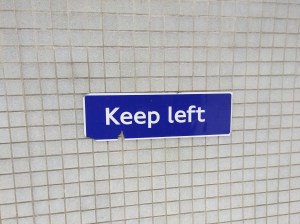
These designs, as much as they may enhance our lives, also control them. Roads in particular have strictly enforced norms governing behaviour. There is nothing in principle stopping you from driving the wrong way up a dual carriageway; from time to time people do (though rarely do they do so deliberately). However, they tend to gain little from the enterprise, even if they manage to avoid an accident or retribution from the law. Urban environments are also heavily controlled and monitored. Walls and barriers channel pedestrians; signs tell them to keep left, walk or don’t walk, to keep out, or that the mall closes at 10pm. The predominance of private property in urban environments further constrains freedom. Designed environments can be perfected with greater financial investment. Thus, the more money a society has to design its environments and to implement those designs, the more control it can exert over its individuals.
IMG_20190323_082147

With control comes homogenization and loss of individuality. The environments are designed around the ‘average’ person: the more average you are, the more convenient you will find them. Everything from homes to shops to entertainment to workplaces become designed for the average person. As you deviate from the norm, you increasingly find the world is not for you. If the environment is selective, those at the extremes of the bell-curve will be eliminated or forced to move elsewhere.

Separately, globalization is leading to homogenization of environments, meaning that there are fewer and fewer ‘refuges’ for those who do not conform to the norm. If life is easier and more convenient in designed environments, then standard evolutionary theory would have us believe that this leads to an explosion of diversity in the population. But when society itself is part of that designed environment, norm enforcement acts to oppose this process. People are arrested for “looking suspicious” or “behaving suspiciously“.

Contrast rural environments. Though there are codes of behaviour (such as the ‘country code‘), the law is weighted more in favour of freedom of access (albeit sometimes to the chagrin of landowners). Even in farmland, ramblers enforce access rights where landowners try to close them off. Many humans, then, hold dear the idea of freedom to roam in natural (or at least, non-urban) environments, whilst cheerfully accepting considerable constraints on and monitoring of their behaviour in cities. Though the fact that farmland is a designed environment detracts from the argument somewhat, freedom is associated with non-designed environments, while control is associated with designed environments.

Nature may impose constraints on access in the wilderness. Marshes, rivers, mountain ranges, oceans, deserts, ice sheets, gullies, dense forest, even the weather – all impede progress if you have a particular destination in mind, or a curiosity to satisfy. All can prove dangerous or even deadly. However, these constraints reward the brave, the inventive, the creative. They encourage thought, ingenuity and intelligence. The cost may be death, but the rewards could be access to new territory and new food sources, new people to meet and trade with. Designed environments offer no incentives, no rewards for ‘breaking the rules’: they encourage only docility and compliance. What is to be gained from going up a ‘down’ escalator?

Of course, it is the aversion of risk that leads us to enhance our environments by designing them to make access easier. We now cross marshes daily at high-speed without worrying about falling ill, getting lost, or stuck in quicksand, thanks in part at least to the ingenuity of our ancestors who built railways, paths and roads across them. We have put bridges across the Firth of Forth, and tunnels under the Channel and through the Alps. Once our whole planet is designed and subjugated in this way, our descendants will be left only with the task of maintenance (itself part of the design); there will be little need for the creativity that created the routes in the first place.

The human race of the future risks being completely homogenized, domesticated and cowed all in the name of convenience. This hominid, which might be dubbed Homo suburbiensis, has no creativity, no individuality, no knowledge of how to survive other than by earning money to spend at the supermarket. The only ray of ‘hope’ is in ‘natural disasters’. A ‘natural disaster’ is an event not directly caused by humans such as an earthquake or a flood, albeit that the latter could be caused by poor catchment ‘management’ or unseasonably high rainfall as a result of climate change. A natural disaster is a disaster from the point of view of maintaining convenient lifestyles, as well as from the point of view of those immediately injured or killed by the occurrence. Either perspective is a purely human one, and I confess to a somewhat cynical suspicion that the former rather than the latter (for those who are not friends or relatives of the dead) is what chiefly merits the label of ‘disaster’ to an event. Life ceases to be easy, and suddenly becomes a day-to-day struggle to find food, clean water and shelter, while avoiding disease. Meteor strikes, hurricanes, supervolcano eruptions, tsunamis, coronal ejections, supernovas, gamma ray bursts, black holes — the universe has a number of weapons in its armoury that can cause greater damage in the short and long term than anything humans can achieve. Where these obliterate our infrastructure, the slate is wiped clean, and if we want to rebuild everything, we will have to design it again.

Disasters occur on various scales of course. The larger the scale, the more difficult the recovery. But the scale of a disaster is also somehow subjective with respect to human population density and interdependence. The more coastal towns there are, the more likely it is that one will get flooded. The more people live near volcanos, the more people will be killed by them. The more interconnected we are, the more remote an event has to be before it has a reduced potential to affect us. Designed environments create fragility and vulnerability. The easier they make life for humans, the more humans they can sustain (even if not sustainably), and so the more humans are affected when the designed environments fail. Worse, where designed environments replace an ecosystem that we once knew how to live in, so that knowledge is lost. Then, when the system fails, no-one knows how to survive in what remains. Designed environments create designed humans, dependent entirely on designed systems to support their existence.

A riddle for materialists

Screen shot of the definition of 'machine' from Apple's dictionary app on 9 February 2019. A machine is defined as: 'An apparatus using mechanical power and having several parts, each with a definite function and together performing a particular task.'

As scientists, we often look at humans and nature as though they are ‘systems‘. Our descriptions of what we observe are mechanistic: formal, mathematical and algorithmical. We don’t want to invoke concepts, very familiar in other endeavours, that we cannot observe and do not have evidence for, but I expect many of us are not entirely happy seeing ourselves, our friends and family, and the natural world, in purely mechanistic terms.

So, what is something if it is not a machine?

It is easy to confuse the fact that something can be described in mechanistic terms with the belief that the thing being described is a machine. So, just because my digestion, circulatory system, immune system, lymphatic system, musculoskeletal system, nervous system, etc. etc. can be described in purely mechanistic language as the function of interactions among cells, molecules, organs, bones and skin; and even though some of these things can be replaced by actual human-made machines (e.g. heart, kidney, artificial limbs) — I am not ‘just’ a machine. To describe me, you, anyone, and indeed the rest of nature itself, as a machine is, at an emotional level, not doing any of us justice.

How can I assert that I am not a machine without invoking the supernatural? Well, one way of handling that kind of argument is to muck around with the definition. I don’t think I need to do that too much, however (see the screen grab above), if I say that I think a machine is necessarily something that has been designed to perform a particular function. If that’s a reasonable definition, then, as it implies, all machines must have a designer. This messes with the brain a little: describing things as machines, something scientists do to avoid invoking the supernatural, fails precisely because so doing means there must be an intentional designer of some sort (intelligent or otherwise) who needs that function performed. I think it’s a bit weak to say we’ve been ‘designed’ by nature — then we might ask who (or what) designed nature. Besides, nature doesn’t ‘need’ the functions performed by humans — looking at various environmental disasters humans have caused (more than just recently), I often wonder whether, if Nature did have intentionality, she would consider herself better off without us. Be that as it may, it is funny to watch documentaries about biology and ecology and count the number of times the word ‘design’ is used by the narrator or presenter.

If you think about it, the absence of a designer who has a function or purpose for us that we must fulfil is liberating. When I first thought of this, I was somewhat unnerved. I had a Christian upbringing. The absence of any purpose felt worrisome, perhaps because it left responsibility for what I did, and did not, do squarely on my shoulders; rather than allowing myself to duck the responsibility and claim I am just fulfilling a deity’s plan for me (or following my genetic programming, or some hapless victim of my environment). Of course, it also meant I am insignificant — there isn’t a supreme ultimate being that is deeply interested in what I do. Many schools of thought end up ascribing some sort of purpose to our lives. Besides being ‘saved’ or becoming enlightened, or whatever your religion gives as your purpose, biologists tell you you must reproduce, capitalists that you must accumulate wealth, Marxists that you must be socially ‘active’, academics that you must learn things, … How incredibly freeing it is not to have to do all those things!

There is no function or purpose we are ‘intended’ to fulfil, no plan, no destiny, no fate. This, however, does not mean we are inanimate; it does not mean we do not ‘do’ things. The things we do cause changes in the environments we inhabit. These changes can be exploited by ourselves, and by other organisms (especially if they are repeated regularly or at least partially predictably); indeed, many of the changes we cause arise from actions that themselves exploit actions by other organisms. We are part of a vast nexus of interactions, a network of life itself that is able to perpetuate itself without intention, consciousness, direction or purpose. It happens because it happens. It seems like fate, it seems like order, because we only have cognitive machinery to recognize patterns, and language to articulate that regularity. But this network is never at equilibrium, it is permanently changing, adapting, co-adapting. Niches and species emerge and disappear as life evolves.

But if we are not machines, what are we? To some extent, the very fact that this question needs to be asked is an expression of the degree to which we have lost any sense of what we are. To describe us as machines is to see us only in terms of some Platonic ideal human, and our differences from that ideal as deformity or malfunction. Instead of which, we are all unique – most of us are genetically unique; those who are not have slightly different experiences of the world that can change their body chemistry, and even the genes they pass on to their offspring. Biologically (and perhaps epistemologically depending on what you think is important about your identity), all that matters is that we can limp along for long enough to participate in the creation of the next generation. Evolution is a constant process of deformity – we are all ultimately deformed single cells. If there is no function, how can there be malfunction? This is not to say there is no suffering, no disease – quite clearly there are patterns of existence where individuals suffer. Sometimes there are interventions we can make that stop the suffering, sometimes there aren’t. But these interventions are not necessarily about restoring our bodies to some Platonic ideal – instead they are focused on stopping suffering.  

There is no blueprint for you, or for me. Even your genes (sometimes metaphorically referred to as your blueprint) are not enough information to replicate you — your experiences of life may have made epigenetic switches turn off or on, and have certainly shaped the neurones in your brain. Instead, we are emergent self-organised systems. We are emergent in that we are the products of millions of years of evolution and co-evolution. We are self-organised in that there is no design for the way we work, and each of us works in individual ways (albeit with significant areas of commonality with other humans, and indeed with other species). We are systems in that the way we work can be described mechanistically. But, if even your twin does not do exactly the same thing as you, how can you be replaced by a machine? We’ve all heard that every snowflake is different, and how we are all different, and how that makes us uniquely precious. In a sense that is true, but not in any way that makes any one of us more special or precious than anyone else. The truth of that statement, however, reflects the importance of seeing ourselves, and the life around us, as more than machines.