Becoming gods

The other day I was a virtual attendee at a workshop in Colorado. The main topic of discussion was ‘climate intervention‘. Climate intervention is deliberate human activity aimed at changing the climate – typically with a view to ameliorating the effects of climate change. There are various technologies that could be used for this purpose, from planting trees through injecting chemicals (such as sulfur dioxide) into the stratosphere, to putting giant reflectors in space.

I was not ready for the impact the discussion of all this would have on my emotional state. Though I have attended academic events on the general theme of sustainability for several years, this was the first climate change specific event I’d been to. Though I see from my smartwatch data that my heart rate was no greater than normal when working, I did find myself experiencing a rising sense of panic. A lump was in my throat, and I could not settle in the evening. I did not want us to undertake these interventions.

Neil Stephenson‘s book ‘Termination Shock‘ explores a scenario around geoengineering. I don’t want to give away too much of the plot, but the main point I want to make anyway is that this meeting I was attending was essentially discussing seriously something that has been the subject of a relatively recent science fiction novel. Neil Stephenson foresaw the metaverse in my favourite book, Snow Crash. I hope Termination Shock isn’t another dystopian prophesy.

The motivation for undertaking such drastic action is clear in the opening passages of another cli-fi book, The Ministry for the Future, by Kim Stanley Robinson. These passages contain a scene in which millions are killed by a heat wave that is unsurvivable without air conditioning, which leads to a power cut. We concentrate a lot on temperature when discussing the climate. It is 1.5C we are trying to limit ourselves to, and when we fail as we are expected to do before the end of the decade, every 0.1C of mean annual global surface temperature increase we prevent is still important. No mention of humidity, however, which is important for two reasons. First, increasing mean annual temperature and increasing humidity are expected to coincide as warmer air can hold more moisture. Second, the combination of heat and humidity is what kills us through hyperthermia.

So-called ‘wet bulb’ temperatures above 35C lead to the human body being unable to cool itself through sweating, and breaching this threashold is made more likely through climate change. Of course, it’s not like a 34.9C wet-bulb temperature is fine, and 35C is fatal. Heatwaves with 28C wet bulb temperature led to high excess deaths in Europe. However, 35C wet bulb is the point at which even a healthy person cannot maintain their body at the right temperature due simply to the laws of physics, with death in hours.

There is, then, a risk as the climate warms, that more parts of the world will become uninhabitable to humans without appropriate accommodation and technology. Since higher humidity is associated with coastal areas, where many of the world’s largest cities are located, these problems will be faced by more populous areas, creating pressure for migration, building and infrastructure design, energy use, technology development, and geoengineering. Essentially, we build ecocyborgs in these areas, people living there run away to more inhabitable parts of the world, and/or we modify the whole world’s climate in the opposite direction to that we’ve been doing since the Industrial Revolution. Of these, only migration avoids choices that entail learning how to make uninhabitable areas inhabitable on the kind of large scale that would be needed for humans to live on other planets than Earth. Our behaviour is putting us into a corner in which ecocyborgs and planetary-scale geoengineering become necessary for our survival.
Gardens

Gardens are the places where humans live out their fantasies about how their relationship with nature should be. Supposed oases of calm and tranquility in the midst of the ‘juggling’, ‘plate-spinning’ and other metaphorical acrobatics of modern life, they are small areas of designed land where we can exert control. Oases indeed they often are: for wildlife they can offer a refuge from the urban and rural deserts we have made. Hedgehogs, toads, bees, foxes, robins – all are noted to depend on gardens for their survival.

However, gardens can also be quite the opposite of oases. Gardening could be said to be the skill of making something grow somewhere it doesn’t belong whilst carefully removing everything that does. Roses, lavenders, peonies, rhododendrons, rosemary – all non-native plants common in gardens. Many are utterly useless to wildlife – to ‘native’ nature (though the picture is complicated); many cannot thrive on British soils and in British climates without perpetual dousing in lime, fungicides and insecticides. Even if derived from a native species, the cultivars themselves have been carefully bred to highlight those aspects of the wild plant deemed useful or beautiful. The result is a vile, gaudy array of cosmetically enhanced specimens; as fake as silicon breasts, botox smiles and hair implants.

The worst thing that one can ever do to a garden is to leave it to its own devices. A so-called ‘overgrown’ garden is known to reduce the value of the houses in the neighbourhood by several thousand pounds. (What kind of word is overgrown in a world of declining biodiversity?) We all know the kind of people who live in houses with such gardens, and we don’t want them for neighbours. Wild, unkempt people with tattoos; smokers, probably on drugs, with hundreds of illegitimate, neglected, barefoot children all half-siblings of each other, terrorizing the neighbourhood with foul language, greasy hair and second hand clothes. In the UK, Community Protection Notice legislation can be used to criminalize people who don’t keep their garden tidy. Some councils even have webpages where you can report an untidy garden (at the time of writing, four I could find were Barking and Dagenham, Bristol, Gateshead, Newcastle-under-Lyme). Put simply, we cannot bear for anyone to break the illusion that we are the masters of nature, and in some cases, enforce the fantasy with the law.

Far from being patches of peace, gardens are landscapes of violence and oppression. Trees are clipped and pruned, lawns mowed, edges strimmed, hedges trimmed. Each task has a special tool of whirring mechanical blades to keep nature in order. The chemical industry is also on-hand with solutions for problems that blades cannot so easily solve. In garden centres the country over, shelves are stacked with fertilizers, insecticides, fungicides, weedkillers and slug pellets. Food for the things we like; poisons for those we don’t. Some gardeners simply give up and opt for convenient, low-maintenance suppression with tarmac, paving and chippings.

Provision for wildlife is equally selective. We napalm a dandelion (the seeds of which I have watched goldfinches eating), but import tons of peanuts and sunflower seeds from around the world to feed the birds with. I have seen sparrows dust-bathing in molehills, but we trap and kill moles, and build our own bird baths. Indeed, birds do well out of gardens, because we like their pretty singing. Baths, houses, feeders; a panoply of goods are available to attract them to your ‘space’. It simply doesn’t occur to us to feed the birds by planting native species (or allowing them to seed and grow of their own accord), which not only provide seeds that birds can eat, but also attract insects to provide further food. But that wouldn’t involve buying things; that would mean we weren’t doing our bit for the economy as well as for nature. Mammals fare rather less well. We don’t mind hedgehogs, but rats, mice, squirrels, and moles are not provided for. Amphibians and reptiles are generally forgotten about, and insects and other invertebrates are, if not pests, then just plain disgusting; exceptions are bumble bees, ladybirds, butterflies (not moths or caterpillars) and worms.

Gardens are displays of wealth and power, and hence of self-esteem. The further we can take the larger area of land from whatever would happen to it if we did nothing, and the more maintenance required to sustain it thus, the greater our wealth and power and sense of self-worth. Lawns used to be such a display, because they required teams of gardeners with scythes to maintain them. Pathetically, lawns continue to reflect status, even though machines replace the gardeners. The lawn is a deliberate area of monoculture. One species only is to be there, and that is the particular variety of grass planted. Clover, daisies and moss are not to be present, regardless of the fact that clover is a valuable source of nectar for bees (several species of which are in decline), and the UK’s moss (and other bryophyte species) are of global significance.

Even in the Bible, gardens are scenes of sin and betrayal. From Eden to Gethsemane, gardens are where the perfect is soiled, the godly profaned. Gardens model our relationship with the environment and for once the Bible truly is prophetic. Our sin is excessively focusing on our own aesthetic; our betrayal the direct and indirect destruction of the species that quietly keep our planet alive.

Mass Production in a Star Topology

High-speed transport networks, the internet, land line, satellite and mobile phone networks, and television and radio broadcasting networks create channels of communication and interaction physical and remote that are not an option in ‘natural’ spaces that have not been thus enhanced. Interactions become less regionally localized, and ever more globalized, and information disseminated more and more quickly.

The internet is a ‘distributed‘ network designed to be resilient through adopting a structure of connections and nodes that meant the whole could keep working even if individual nodes or connections were taken out. Since the late 1990s, when the World Wide Web was popularized and businesses worked out how to make it pay for itself using advertising, it has threatened more traditional information ‘star topology’ broadcasting networks that operate from a single point. This democratized broadcasting — anyone, no matter who they were or what training they had, could upload a video, create a webpage, and publish their story. Through breaking spatial barriers to meeting like-minded people, the internet also enabled extremists world-wide to connect and organize.

But all this democratization did was change the set of ‘stars’ with whom we had one-sided friendships, beyond the TV and radio celebrities beamed into our living rooms, to bloggers, vloggers, and other internet ‘sensations’. People turned themselves into products for their viewers to consume, and can now even make a living from the advertising revenue. And the advertisers turned the viewers into data products to sell to businesses. The internet did not change the star topology, it gave it a more robust foundation, allowed it to become more niched, and has begun the process of digitizing us. It becomes that bit less of a stretch of the imagination to believe we could disembody ourselves and live as holograms.

The sinister side of being a product is the idea that we are made, moulded and manipulated. The ideas of radicalization, deradicalization, and cognitive behaviour therapy suggest we can be programmed. If we assume an agenda to this process, mass production is about creating a body of people willing to buy consumer goods and services, or who will adhere to religious or political beliefs, or carry out acts of terrorism. The politics of identity may seem to be a reaction against this — reasserting our own ideas of who we are rather than being told. But even this feels a bit like packing yourself conveniently in a box so people know how to target messages to you, whilst also creating an in-group/out-group dynamic making you more suggestable and reinforcing your group identity.

The increasing physical isolation and social interaction through electronic devices is conditioning us for a life of separation from the social as well as the natural environment. This separation will be essential in the early stages of space travel. People will leave their home planet and their loved ones behind, possibly never to return. However, if we interact with each other sporadically through social apps, the time lag associated with the spatial separation of the space ship with earth will be nothing new.

The Body Ugly

The body is the link between the mind and the environment. From the inside out, it is our ‘user interface’ to the world; from the outside in, it is that part of other people’s environment that they associate with us. A society accustomed to the convenience of designed environments will inevitably have designs on their bodies. Who wants badly-dressed, smelly, overweight, spotty, dandruff-ridden misfits in the perfect, shining, modern architecture we have created for ourselves? Who wants saggy, blemished, mis-shapen lines where smooth, clean contemporary lines belong? Every hair, every wrinkle, every mole, every pimple is like a spot of rust on a steel girder, a patch of lichen on a block of concrete, chewing gum on a granite paving stone, bird shit on a smoked glass window. We do not belong in the perfect environments we create for ourselves. We spoil them by our mere existence in them, just as we spoil the natural environment by building them in the first place.

Our bodies are our ‘original sin’ in the consumerist religion. Never mind the sins of the flesh; the sin is the flesh. We face a choice: either retreat back to the grubby, cockroach and mite-infested holes we call home, and interact with the virtual world through a beautiful avatar, surrounded by festering pizze and flat cola; or do penance for our wretchedness on the operating table and have the ‘confidence’ to venture out into the city. There are few flaws that cannot be fixed. Just like the Christian Church in medieval times, some sins can be forgiven, others are deadly, but for an appropriate fee, forgiveness can be obtained. Each cut of the surgeon’s knife is a mortification, a flagellation to repair our faults. And when the bandages are removed, we are reborn, perfect and sinless (once the swelling and bruising dies down).

For those pilgrims unwilling to undergo the rigours of plastic surgery, there are still options. We can paste over the cracks and blemishes in our skin with any number of unctions; we can perfume ourselves to hide our own foul stench; we can anoint our hair with styling products and our scalp with laboratoire-formulated shampoo to keep on top of the dandruff. Our hair can have a glossy sheen in any colour but grey, our skin can glow, our teeth can be purest white.

We shape the environment, the environment shapes us back.

Architecture

Architecture, civil engineering, and planning are the means by which we design our environments. The environments created are there to perform a function: aesthetic perhaps, but also, and chiefly, practical: the designed environments are there to facilitate some of our life activities. Inevitably, such designs entail compromises to manage costs, materials, pollutants and local norms and regulation. These compromises may mean not everyone benefits from the designs; some may even be hampered.

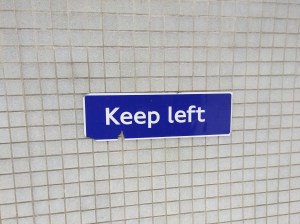
These designs, as much as they may enhance our lives, also control them. Roads in particular have strictly enforced norms governing behaviour. There is nothing in principle stopping you from driving the wrong way up a dual carriageway; from time to time people do (though rarely do they do so deliberately). However, they tend to gain little from the enterprise, even if they manage to avoid an accident or retribution from the law. Urban environments are also heavily controlled and monitored. Walls and barriers channel pedestrians; signs tell them to keep left, walk or don’t walk, to keep out, or that the mall closes at 10pm. The predominance of private property in urban environments further constrains freedom. Designed environments can be perfected with greater financial investment. Thus, the more money a society has to design its environments and to implement those designs, the more control it can exert over its individuals.

IMG_20190323_082147

With control comes homogenization and loss of individuality. The environments are designed around the ‘average’ person: the more average you are, the more convenient you will find them. Everything from homes to shops to entertainment to workplaces become designed for the average person. As you deviate from the norm, you increasingly find the world is not for you. If the environment is selective, those at the extremes of the bell-curve will be eliminated or forced to move elsewhere.

Separately, globalization is leading to homogenization of environments, meaning that there are fewer and fewer ‘refuges’ for those who do not conform to the norm. If life is easier and more convenient in designed environments, then standard evolutionary theory would have us believe that this leads to an explosion of diversity in the population. But when society itself is part of that designed environment, norm enforcement acts to oppose this process. People are arrested for “looking suspicious” or “behaving suspiciously“.

Contrast rural environments. Though there are codes of behaviour (such as the ‘country code‘), the law is weighted more in favour of freedom of access (albeit sometimes to the chagrin of landowners). Even in farmland, ramblers enforce access rights where landowners try to close them off. Many humans, then, hold dear the idea of freedom to roam in natural (or at least, non-urban) environments, whilst cheerfully accepting considerable constraints on and monitoring of their behaviour in cities. Though the fact that farmland is a designed environment detracts from the argument somewhat, freedom is associated with non-designed environments, while control is associated with designed environments.

Nature may impose constraints on access in the wilderness. Marshes, rivers, mountain ranges, oceans, deserts, ice sheets, gullies, dense forest, even the weather – all impede progress if you have a particular destination in mind, or a curiosity to satisfy. All can prove dangerous or even deadly. However, these constraints reward the brave, the inventive, the creative. They encourage thought, ingenuity and intelligence. The cost may be death, but the rewards could be access to new territory and new food sources, new people to meet and trade with. Designed environments offer no incentives, no rewards for ‘breaking the rules’: they encourage only docility and compliance. What is to be gained from going up a ‘down’ escalator?

Of course, it is the aversion of risk that leads us to enhance our environments by designing them to make access easier. We now cross marshes daily at high-speed without worrying about falling ill, getting lost, or stuck in quicksand, thanks in part at least to the ingenuity of our ancestors who built railways, paths and roads across them. We have put bridges across the Firth of Forth, and tunnels under the Channel and through the Alps. Once our whole planet is designed and subjugated in this way, our descendants will be left only with the task of maintenance (itself part of the design); there will be little need for the creativity that created the routes in the first place.

The human race of the future risks being completely homogenized, domesticated and cowed all in the name of convenience. This hominid, which might be dubbed Homo suburbiensis, has no creativity, no individuality, no knowledge of how to survive other than by earning money to spend at the supermarket. The only ray of ‘hope’ is in ‘natural disasters’. A ‘natural disaster’ is an event not directly caused by humans such as an earthquake or a flood, albeit that the latter could be caused by poor catchment ‘management’ or unseasonably high rainfall as a result of climate change. A natural disaster is a disaster from the point of view of maintaining convenient lifestyles, as well as from the point of view of those immediately injured or killed by the occurrence. Either perspective is a purely human one, and I confess to a somewhat cynical suspicion that the former rather than the latter (for those who are not friends or relatives of the dead) is what chiefly merits the label of ‘disaster’ to an event. Life ceases to be easy, and suddenly becomes a day-to-day struggle to find food, clean water and shelter, while avoiding disease. Meteor strikes, hurricanes, supervolcano eruptions, tsunamis, coronal ejections, supernovas, gamma ray bursts, black holes — the universe has a number of weapons in its armoury that can cause greater damage in the short and long term than anything humans can achieve. Where these obliterate our infrastructure, the slate is wiped clean, and if we want to rebuild everything, we will have to design it again.

Disasters occur on various scales of course. The larger the scale, the more difficult the recovery. But the scale of a disaster is also somehow subjective with respect to human population density and interdependence. The more coastal towns there are, the more likely it is that one will get flooded. The more people live near volcanos, the more people will be killed by them. The more interconnected we are, the more remote an event has to be before it has a reduced potential to affect us. Designed environments create fragility and vulnerability. The easier they make life for humans, the more humans they can sustain (even if not sustainably), and so the more humans are affected when the designed environments fail. Worse, where designed environments replace an ecosystem that we once knew how to live in, so that knowledge is lost. Then, when the system fails, no-one knows how to survive in what remains. Designed environments create designed humans, dependent entirely on designed systems to support their existence.

Food Politics

Human control over the production and distribution of food has led to there being food politics. Eating is one of the simplest and most basic pleasures of human existence. Now you cannot enjoy a meal without offending someone. If you eat meat, you offend those interested in animal rights, or those concerned about climate change, water conservation, rainforest destruction, or food inequality. If you do not, you offend those farmers who take a pride in their husbandry. If you eat fish, you offend marine conservationists; if you do not, you offend fishers. Conventional or organic; GM or GM-free; fair or free trade; wild, local or global? 

For the ethically aware, food packaging is now covered with the icons of various labelling schemes. The market asks you to pay a small premium for the fair treatment of workers, avoiding overexploitation of the environment, giving animals better conditions, and so on – which turns morality into a luxury commodity, and hence a weapon for all sides in the class war to beat each other with.

That is before the thorny issue of nutrition is tackled. Marketing boards for virtually every foodstuff from blueberries to mackerel have funded or drawn on research proving the nutritional benefits of the product they push. They are not the only ones: charities representing special interest groups also fund research. Thus, it is impossible to know, without a Ph.D. in the biochemistry of digestion, whether, for example, veganism is a natural, healthy diet, or a suburbanite fantasy propped up by vitamin pills.

It might be argued, indeed it has been argued, that all that matters is price. Food labelling is consistently resisted by industry. It is astonishing how our society’s leaders can promote an economic ideology that works only if everyone makes decisions with complete knowledge, and then allow themselves to be lobbied so as to prevent consumers from accessing information. That said, we clearly don’t entirely trust the market when it comes to food, as testified by various governments issuing incentives to farmers. Food security is a discourse that has emerged relatively recently. As well as concerns about whether we can actually grow enough food to feed everyone (whether now, or later this century), there is also the potential weaponization of food. In the latter case, countries with a food surplus could use that to their strategic advantage against countries that need to import food. Alongside all that is speculation by investors, believed by some to be responsible for the Arab Spring through causing a spike in grain prices. The market has no answer (except, “Devil take the hindmost“) for what happens when it fails to provide everyone with enough to eat.

Contrast all this with picking a blackberry from a bramble (assuming, for now, the bramble is on public land, on uncontaminated soil, and a respectable distance from chemical sprays – perhaps we should imagine picking a blackberry from a bramble several millennia ago). The blackberry has no label telling you it is suitable for vegetarians, has been fairly traded, grown by labourers working for a workers’ co-operative, is free of artificial colours, flavours or preservatives. It has no breakdown of its salt, carbohydrate, protein and fat content. You pick it, you put it in your mouth, you chew it, it tastes delicious.

If we can make such a mess of food, if we can turn eating from heaven into hell (unless you are willing, and indeed in the luxurious position of being able, to ignore the issues), what happens when all ecosystem services are provided through engineered biomes? 

Ecosystem ‘Services’

The concept of ecosystem services has its origin in the desperation of ecologists to provide some means of expressing the value of ecosystems in the dominant language of the day: that of the marketplace. For some reason the values of such things as flowers, crows, oak trees, marram grass, basking sharks, garden snails and millipedes are not apparent unless they can be expressed in monetary terms capturing the contribution they make to sustaining human existence. Without monetary values thus expressed, they are, in economic terms, ‘externalities‘; things that cannot be factored in to the analysis. The proper way to treat an externality is to acknowledge it, and to include that acknowledgement in the decision-making process. In practice, externalities are simply things to be ignored. Many argue, therefore, that ecosystem services, contingent valuation, and other efforts to express the value of the ecosystem in the language of the market place, are pragmatic approaches that at least prevent these matters being ignored by the “blind leaders of the blind“. Nobody seems to talk of doing a proper job of economic analysis in the first place…

The concept of ecosystem services is, however, a compromise too far. The language of ‘services’ is confused with the consumer culture. It implies we have a choice. We do not. We are not customers of the ecosystems we inhabit (even if we are consumers of it); and if we are not happy with the service provided we have only a limited capacity to move: We cannot currently take our custom to another planet, for example; and even within our home planet, people’s capacity to move may be limited by wealth, health, or institutional barriers such as immigration controls. This monopoly of planet Earth over our location breaks the assumptions of market theory; for now, it is one monopoly we are powerless to prevent. But those with paranoid tendencies might suggest it is no coincidence that the hegemony of the market place is responsible for environmental destruction on a massive scale. How else are we to end the tyranny of Nature’s monopoly?

Services also implies substitutability. Suppose we design a machine that performs an ecosystem service more efficiently than that provided by Nature. As rational consumers we should discard the natural system in favour of the newly invented machine. For example, bees provide a pollination service for a number of crops we consume, including almonds. Latterly, however, this service has become unreliable and inefficient. There is a gap in the market for a more reliable pollinator. Perhaps one day this gap could be filled using advances in nanotechnology. Nanobees would be solar powered robots that would collect pollen, and redistribute it where it is needed. These nanobees could be designed to focus on particular species, so that pollen is used efficiently and sent only where it is useful. The nanobees could perform genetic analysis of the pollen to optimise the flowers it fertilises to deliver a better cropped product to the consumer. The nanobees could also collect nectar and deliver it to a honey manufacturing machine. Plus, nanobees would not sting. With the development of nanobees, no-one need ever depend upon unreliable, inefficient natural bees again. The bee would be irrelevant to human existence; if bees could not make a living for themselves from whatever humans do not need, then they could safely be allowed to go extinct. That is progress.

It is one thing to discard an old car for a new one that is more efficient, or to throw away a phone and replace it with a shinier model with more features. Surely it is a different thing altogether to discard a species in favour of a machine? Clearly there is a moral dimension. Another ‘externality’ then, but one that has in the past enabled us (albeit not without a significant struggle) to legislate against slavery despite enormous economic incentives not to. That said, slavery is still a significant contemporary problem. John O’Neill, now at the University of Manchester, has made a damning critique of contingent valuation, arguing that it is either bribery (if you are paid to compensate you for the loss of an ecosystem amenity), or extortion (if you are asked to pay to stop someone destroying it).

But the moral dimension disappears when all the consumer sees is the (fiscal) price. Suppose nanobees could be mass-produced for a fraction of a penny each. All you will see in the shop is better quality produce at a lower price. Bee-pollinated fruit won’t be as good, and it will cost more. How much more will you be prepared to pay for the poorer quality product just to save the bee? There is the extortion. Not in your face, not backed up with menaces, but side by side on the shelf, passively waiting for you to decide which to buy. Is this scenario so far-fetched? Exactly the same phenomenon occurs today with fair-trade produce (how much more are you prepared to pay to ensure the producer got a fair price?), and similar ‘ethical’ labelling: organic, cruelty-free, labour behind the label; there’s one for every flavour of do-gooder. And if you can’t afford to pay the extra? Thus the marketplace corrupts concern for anything other than money into something bourgeois. Ethics is merely status-signalling.

Ecosystems are not our servants; indeed, given our dependence on them, the relationship should be quite the opposite. The problem comes when we evaluate ecosystems and their constituent parts in terms of the transformations they achieve – their function: the production of oxygen from carbon dioxide, sunlight and water; the manufacture of salicylic acid; the pollination of almonds. Function can be seen in quite mathematical terms – the domain of the function is a series of chemicals in particular locations, and any physical resources (sunlight, heat, etc.) before the transformation made by an organism; the range is the same after. The transformation is the mapping the function performs. If we see things purely in terms of functions, we can ask ourselves whether a particular transformation can be achieved in a different way. An ecosystem is thus simply a series of functions that, if it is sustainable, forms, in broad terms, a circle – a loop where the domains of each function in the ecosystem are the ranges of others – for every producer of oxygen, there is a consumer. 

The services culture takes this further, attributing human values to functions. These values give purpose to an ecosystem that is otherwise without purpose (simply a self-perpetuating loop that repeats until it can’t). Functions that have high human value are preferred to functions that have low human value. Where humans have the power to interfere, the circle is distorted: the distortion of the circle shows the values, the degree of distortion the power. Hence the forest becomes a field, the meadow a motorway, and the floodplain a housing estate. Ecosystems are circles within circles – each life its own self-replicating loop. What is distorted in the ecosystem is also distorted in the organism, all to reflect human values. So it is that the aurochs becomes the cow, the jungle fowl the broiler chicken, the boar the pig; thus does grass become wheat, rye and oats; and jungle becomes cattle ranch and palm oil plantations. Everything, from individual plants and animals to biomes, is distorted according to its utility. The circle is broken and becomes a line: the line of human progress, leaving in its wake chemicals that are not broken down or used by other parts of the system.

We Walk Among Them

The belief that one is an alien is usually associated with some form of insanity presumably brought on by reading too much science fiction; and, it may be imagined, with a desire to attract attention in a society where it is all too easy to feel ignored. Yet I feel like I think an alien might. I dwell less in my environment than on it. I look around the surrounding countryside, and I have no idea how to survive in it. I don’t know what plants are safe to eat or where to find them; I don’t know how to catch prey; I don’t know how to build a shelter from local materials; I don’t know how to treat illness; I don’t know how to light a fire or make tools. To be honest, I don’t particularly want to know either – it is interesting in an abstract, academic way of course, but I don’t think I would enjoy suddenly being forced to live a hunter-gatherer existence on a permanent basis. Instead, my head is filled with knowledge about computers, technology, brands, celebrities, insurance policies, TV shows and power tools.

All things that sustain me come from somewhere else that, as far as the ecosystem I inhabit is concerned, may as well be from another planet. The power that heats my house is generated elsewhere; the food I eat is grown elsewhere; the water I drink treated elsewhere; my medicines manufactured elsewhere; my waste disposed of elsewhere. My home planet is the global supply chain and the infrastructure that allows me to access it. It is a fragile planet I can just about survive in, as opposed to the natural environment on which my home is layered, which is a planet in which I stand no chance of survival (in the long if not medium term). It has nothing to do with the rock, the water and the earth where I am, which is only there to provide aesthetic and recreational amenity.

Chances are I think you are an alien too. Before you scoff, how irresponsible does it feel to go for a hike in the wilderness (or as close to wilderness as you can access) without the following: a waterproof jacket, stout footwear, warm clothes, a hat, sunglasses, suncream, GPS-enabled mobile phone? Of course, even these items are in some ways not specific enough – your clothes should be multiple layers, constructed using special breathable man-made fibres that won’t soak up your sweat and put you at risk of hypothermia. Your waterproof jacket would likely also be made of advanced materials. Even suncream now contains nanoparticles. All this technology is designed to protect you from the elements. Adventures into the wilderness even involve taking space food with us: dried food that we can reconstitute on a camping stove with carefully boiled water (the only resource we trust ourselves to collect from the environment, and interestingly, a resource that would need to be abundant on any other planet we might one day colonize). We must be the only animal to go to such lengths before venturing into the environment.

How would you recognise an alien species that had been living on a planet for several thousand years? Certainly initially you might find them living in geodomes, leaving them only carefully in space suits. But over time, given enough resources, perhaps they might have bred plant species that could survive outside the geodomes, and the aliens themselves might have evolved a little (or modified their genome) to tolerate better the differences in environmental conditions between their home planet and the colonized planet. The atmosphere might have been adjusted using industrial processes. There could be networks of tunnels, perhaps. Technology might have been developed to enable the aliens to roam more freely – for longer time periods and further distances from the geodomes. We are reaching a point where in principle we might not be able to tell the difference between an alien planet that humans had colonized for a few thousand years, and our habitation of our home planet.

This boundary becomes more blurred when the weather is extreme. When I visit hot countries (and personally, I start to feel uncomfortable when the temperature reaches 25C), I find myself moving between one air-conditioned space after another: from my air-conditioned hotel room to the air-conditioned public transport network to the air-conditioned conference venue that is usually the reason I am in the ‘hot’ country in the first place. Every minute spent in the open air is a minute longing for the next air conditioned space. Equally, in winter in Scotland, I move from my centrally heated house to my car with the hot air blowing on maximum, to my centrally heated workplace. If my car, house and workplace were air-sealed, and I moved between them in a space suit, I might as well be on the moon! If Passivhaus design takes off, buildings will soon become more air-tight. And if the predictions of climate change scientists are right, extreme weather will become more and more normal and we will need to adapt our homes and infrastructure to cope.

The alienation of humanity from its environment is reflected in the fact that we see ourselves as separate from it in the first place. The conceptualisation of the relationship between humans and their environments using terms such as ‘coupled’ (as in: ‘coupled’ human and natural systems) suggests such separation. More than this, it not only suggests that human systems can be decoupled from natural systems, but that they were so at some point in the past, and have only recently been joined! Even scientists think we are aliens!

Though we ourselves are aliens, we are (ironically) increasingly concerned with aliens in our environment. Aliens that we have introduced to our local ecosystems from other ecosystems: some harmless, others dangerous, denoted by the use of the adjective ‘invasive‘. It is not just species that are aliens in our environment, but also manufactured chemicals and biochemicals. These ‘pollutants’ defile our conceptions of the purity of the natural environment – by which we are horrified even as we decadently consume the goods that are responsible for it. It is a kind of prurient Victorian hypocrisy.

It may seem like playing into the hands of those who work to belittle concerns of environmental activists to reframe pollution as a hypocritical attitude to the myth of the pristine ecosystem. Particularly if it were then argued that pollution is an ‘opportunity’ for evolution (the linked articled doesn’t) – a shock to the ecosystem that sends it on a journey to another supposedly ‘harmonious’ equilibrium. Conservation efforts are essentially methods of preserving what we think ‘ought’ to be present in the environment – though well-intentioned perhaps, they are in some sense no less industrial than activities traditionally regarded as environmentally exploitative. Indeed, sometimes conservation efforts are just as damaging as the supposed problem they aim to solve. And conservationism doesn’t have an entirely comfortable political history. Nowadays, conservationists could be seen simply as extorting ‘penances’ from the public to assuage their guilt about environmental ‘sin’, and using them to create an environmental commodity: a nature ‘reserve’, a species ‘saved’ from extinction. Yet the species chosen are those regarded as valuable to humans – usually mammals. There are not offers to adopt a threatened slug, insect, bacterium or virus as there are for snow leopards, dolphins, tigers, elephants, gorillas, orangutans. (Though there is this blog and a joke both of which I came across whilst searching the internet for such things as ‘adopt a smallpox virus’ and ‘adopt a Yersinia pestis‘.)

Instead, perhaps we should recognise that endochrine disrupting compounds, microplastics, pharmaceuticals, heavy metals, carcinogens, dioxins, parabens and C8 are now irrevocably a part of the global ecosystem, and species that cannot cope with them are irrelevant; they are the dinosaurs of the present day. And since dinosaurs evolved into birds, perhaps we should wait and see what interesting species evolve from the new chemical soup we are creating. (Assuming we are not among the dinosaurs…) The same applies to introduced species, frankencrops, and the other ghouls and ghasts of ecoarmageddon. Conservationists need to embrace change.

And if nature is too slow to adapt, industry (a hotbed of positive thinking) can exploit the ‘opportunities’ it creates for the benefit of its customers. For example, reduced fertility arising from endochrine disruption can be handled by in-vitro fertilisation. Cancers caused by dioxins can be treated with chemotherapy drugs. Probiotics can replace the bacteria removed by antibiotics. Vitamin and mineral supplements can compensate for the decreasing nutrition in food. Pharmaceuticals are part of the human adaptive process to living in the environment we are creating, just as anxiolytics, antidepressants and virtual realities are there to help us bear it. Instead of seeing medication as a sign of ill-health, we should see it as a positive expression of our adaptation to the new environmental reality, and a further step on the path of our transition to full alien-ness: intergalactic citizens of nowhere.

Nature, the Replicator and the Holodeck

Nature is typically cast as a mother. As such can be seen along the lines of the feminist charicature of the stages in the life of a woman. As a virgin, we see a pristine ecosystem, a bounty waiting to be exploited. As a mother, Nature’s provision is bountiful and sufficient, and her authority beyond question. As a whore, nature’s resources are exploited and spoiled. As a crone, the exploitation has gone on long enough that she has dried up: withered, wrinkled and infertile, Nature’s bounty is no longer enough. There are two trajectories after that – one is death; the other, resurrection: ‘Nature’ is rebuilt to serve human needs.

Many years ago, I listened to a talk given by Dr. Keith Farnsworth, an ecologist now based at Queen’s University Belfast. It has stuck in my mind. He did not use language such as the above, but the parallels in his theorization of stages of human-environment interaction are striking. The first stage he described as ecosystem occupation — humans move in to an ecosystem. The second stage is ecosystem adaptation, in which humans make alterations to the ecosystem so it better meets their needs. The third and final stage Dr. Farnsworth outlined is ecosystem domination: humans completely control the ecosystem so it meets only their needs.

His theorized trajectory, which I cannot find written up among his extensive list of publications, could be refined with a fourth stage: ecosystem elimination. Ecosystem elimination occurs in two ways: destruction and substitution. The cause of the former case is simply that the control the humans have exerted over an ecosystem in the domination stage is temporary because we have not fully understood the processes by which the resources we rely on are renewed and regenerated. The domination is unsustainable and after a period of time, the ecosystem collapses. There are plenty of examples of this in the history of agriculture, especially where agricultural practices that have evolved in one biome have been transferred to another. That’s beside the point that domination of any kind seems rarely to be sustainable indefinitely. Worms turn.

Ecosystem elimination by substitution is still in the realms of science fiction; but it happens when we no longer need ecosystems to sustain human life. In Star Trek, ecosystems have disappeared into a machine, the replicator, that creates food presumably from waste, by decomposing the latter into its constituent atoms and reconstructing it as a meal. This is the ultimate junk food; quite literally, eating shit! (This is not entirely fantasy I suppose, since faecal coliforms have been found in hamburgers.) Recognising the amenity value provided by ecosystems, a holographic projection suite with haptic enhancements, the holodeck, is provided for the crew of the Starship to enjoy some recreation. These simulated spaces presumably have none of the inconveniences of real ecosystems (unless requested by the user): no biting insects or ticks; no poison ivy; no allergens or pathogens; never too hot or too cold. Instead, simulated wind in simulated trees on a simulated balmy evening; breathing simulated fresh air while listening to simulated birds singing simulated songs as they go to a simulated roost. All available at the push of a button, whenever the mood takes you, without having to wait for the sun to set. This is Eden made real, or as real as needed to pass the environmental equivalent of the Turing Test.

Are contemporary cities much different from space ships in science fiction? Instead of replicators, we have supermarkets. Supermarkets are increasingly moving away from selling fresh ‘raw’ ingredients to providing ready-meals. These have more ‘value-added’ than raw ingredients, and hence better profit margins. One could almost pretend the microwave oven was a replicator. Of course, supermarkets obtain their produce from farms, arguably dominated ecosystems, but for how much longer? Architects have already designed skyscrapers where each floor is given over to hydroponic systems for growing food. Hydroponics are indeed already widely used for growing fruit and vegetables under glass, allowing their availability on the shelves even when not in season.

If supermarkets are replicators, then parks (or ‘green spaces’) are holodecks. These spaces, which are too small and too disconnected to support much in the way of wildlife, often consist of an expanse of lawn with a few trees growing in them. Sometimes there are shrubs and flowerbeds, and a pond, lake, river or stream. Paths will be provided so we can walk and enjoy the amenity without getting our shoes muddy. The countryside is not really needed. This matter was brought into sharp focus for me when I left an employer based in London to take up a position in Aberdeen. My colleagues were mystified as to why I would want to move away from the UK’s capital. “What is there in Scotland,” they asked, “that you could not get in London?”

A pinch of salt

Ever since reading an opinion piece in the Guardian about Soylent, I have been intrigued by the possibility of experimenting with meal replacements as I thought the experience would be fascinating to look at from an ecocyborg manifesto perspective. It took several months (and the encouragement of a fellow hacker) to work up the courage to give it a try, though we ended up using Huel rather than Soylent because it’s available in the UK in powdered form. For £45, you got two bags of Huel, a shaker, a T-shirt and an instruction manual.

What is this stuff, and what’s it all about? I don’t know whether it’s true or not, but Huel strikes me as being a contraction of HUman fuEL, and it’s what you end up with when you regard food as something that is solely about nutrition to keep the body and brain functioning and generating value. I was particularly struck by the quotation of Rob Rhinehart’s (Soylent founder) deleted blog post in the Guardian opinion piece: “I think it was a bit presumptuous for the architect to assume I wanted a kitchen with my apartment and make me pay for it.” Quite. If the function of food is simply to keep you going, in much the same way electricity does a computer, or fossil fuels a car, then what the hell are you doing faffing around choosing recipes, chopping vegetables, making sauces, and inviting friends over for a meal? That’s time you could be earning money, spending it, or undertaking ‘lifestyle’ activities like free-sky-board-wave-bike-surfing or whatever it is that means you’ll need a crossover SUV, some form of lycra costume, and about £2,000 of kit.

Ironically, the ecocyborg is already putting pressure on you to drop food preparation; another comment piece in the Guardian suggested houses of the future won’t have kitchens. This is so that more and more of us can be crammed like cattle into compact megacities in the name of efficiency and sustainability. The message will, in time, become clear: eating food, rather than scientifically prepared just-add-water nutrient sachets will be seen as a bourgeois indulgence. How outrageously luxurious to be able to cook when you could be running another delivery or developing the next viral meme!

My main finding from trying Huel was that the only way I could get the stuff down without gagging was if I took it with a pinch of salt.